How to use leaflets in conjunction with your social media
Phil Gee
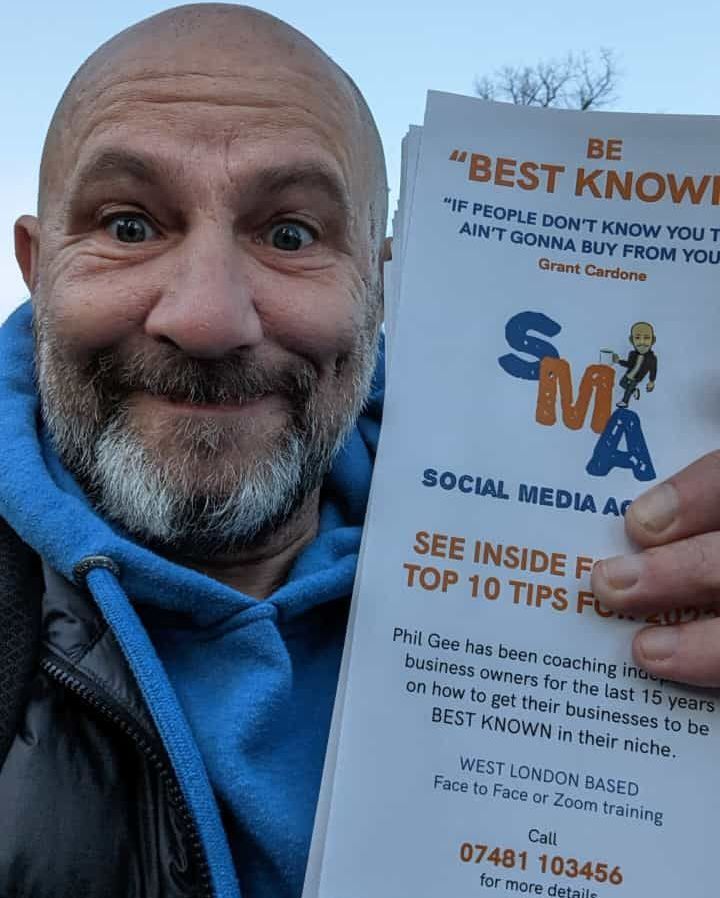
A man with a beard is holding a sign that says be best known

As a business, you want to get your products in front of as many people as possible. The more people who know about your business and what you do, the better chance you have of increasing sales and growing your business.

There are many ways that businesses can market their products or services: through social media, print materials (like leaflets), billboards and even word-of-mouth recommendations from satisfied customers. But which method is best?


  • Understanding Leaflet Distribution


What is a leaflet?

A leaflet is a piece of paper or card that contains information about your business or product. It can be used as an advertisement, brochure and more. Leaflets are commonly used for promotional purposes because they're inexpensive to produce, easy to distribute and have the potential to reach large audiences.


Advantages:


  1. Affordable - The cost of printing leaflets is much lower than other types of marketing materials such as magazines or newspapers.
  2. Easy distribution - You can easily hand out leaflets at events like trade shows or conferences where there's already an existing audience for them (i.e. people who are interested in what you're selling). You don't need any special equipment either; just grab some folders from home and start handing them out!


  • Using Leaflets in Your Marketing Strategy


When you're designing your leaflet, it's important to consider the audience that you are targeting. For example, if you're marketing a product or service aimed at children and young adults then bright colours and fun designs work best. On the other hand, if you are targeting older people then more muted colours might be better suited to their tastes.


The other thing to think about when creating leaflets is how much information they should contain. You don't want them too wordy because this can make them difficult for customers who aren't used to reading lots of text at once but equally it's worth including enough detail so that people know exactly what they're getting themselves into when they sign up for the specific service/product etc.


Once you've got all of this figured out, then it's time for distribution! This can either be done manually by going door-to-door or handing out leaflets in public places such as supermarkets where there will be lots of foot traffic passing through regularly.


  • Understanding Social Media


Social media is a powerful tool for marketing, but it can also be a risk. It's important to understand the risks of social media before you begin using it.


Social media has become one of the most important ways that people communicate with each other and build relationships. The goal of any business owner should be to reach out to customers, build relationships with them and get their feedback on products or services offered by your company. Social media gives you this opportunity in real time so that you always know what people are saying about your company or brand at any given moment in time.


  • Using Social Media in Your Marketing Strategy


Social media is an excellent way to gain exposure and build your brand. You can use social media to:


  1. Promote your business, product or service
  2. Encourage people to buy from you
  3. Share useful information that will help them make decisions about their lives (e.g. how-to videos)


  • Integrating Leaflets and Social Media


There are a number of ways that you can integrate leaflets and social media. The first is by tracking how many people have seen your leaflet, and then measuring the return on investment (ROI). If you're using a service like Google Analytics, there will be an option to clicks on links in emails or SMS messages. This will allow you to see which links were clicked most often--and therefore which ones were most effective at driving traffic back to your website or landing page.


Another way of integrating leaflet distribution with social media is by using hashtags on Twitter or Instagram when posting pictures of your leaflets being distributed around town. This will help increase visibility among potential customers who may not otherwise have seen them!


Conclusion:


You've learned about the benefits of leaflet distribution and social media, as well as how to use them together to create an effective marketing strategy. If you're ready to get started with your own campaign, we'd love to help!


If you have any questions or comments about this article, please leave them below in the comments section. We'll do our best to respond quickly!


Blog

End the Year Smart: Your Secret Weapon for a Profitable January
By Phil Gee November 23, 2025
End the Year Smart: Your Secret Weapon for a Profitable January
Use December to Springboard Your January Sales
By Phil Gee November 23, 2025
Beat the Christmas Rush: Use December to Springboard Your January Sales
By Phil Gee November 21, 2025
Look, I've seen a lot of changes in the digital world since 2007. I was there for websites, social media, and everything in between. But I’m telling you straight: this AI shift is the biggest opportunity of our lifetime. You're seeing it, you're hearing about it, and you might even be scared by it. But while everyone else is debating or procrastinating, you need to be running. This is why you need to stop messing about and jump on the AI train now. 1. The War Is Already Here (White Collar Too!) People are losing their jobs right now, and this time, the AI is coming for the office work—the admin, the drafting, the repetition. Nobody cried when robots took over the most mundane tasks, but suddenly, when AI touches the manager's job, it's a problem. Here’s the punchline: Nobody owes you anything. This is business; it's war. You need to adjust, figure it out, and use this technology to protect your business. Don't waste time on excuses or silly ideologies. 2. You Are Sitting on a Gold Mine If you’re a small business owner, entrepreneur, or work in marketing or customer service, you are uncomfortably fortunate. You are in the sector that will taste the impact of AI first, hardest, and fastest. This gives you an incredible advantage. Why? Because you are already interacting with the tools and seeing what works in real life, not just in PowerPoint decks. You have the chance to be the loudest, most practical voice in your organisation, but only if you become a practitioner of these tools. 3. The Two Rules to Win: Tech Mastery and Deep Humanity To win the next 25 years, you have to go hard in two completely opposite places: Rule 1: Tech Mastery (The Hands). Don't be the architect who delegates; be the practitioner . I still write the copy for my own posts because you have to understand the tools deeply. Your knowledge of how to use the software is your biggest asset. Get your hands dirty now. Rule 2: Deep Humanity (The Heart). As the AI handles the mundane tasks that used to eat up your time, the human part becomes incredibly valuable. We need to scale the unscalable: genuine kindness, surprise and delight, emotional connection, and showing you truly care about your customer. This is the difference between a real connection and a cold, automated answer. 4. Speed is Your Only Moat While big corporations are still holding meetings about meetings, you, the small business owner, are already running. In business, speed beats scale every time. The window to gain an advantage is right now. The Ultimate Business Truth: Everything in business is bullsh*t except for two things: Your Team (most important) and Your Customer (everything else). Use AI to free up the time you spend on the busywork so you can focus 100% on serving your customers with humanity. The Brand Battle: As technology commoditises service and data, Brand is the ultimate moat . Build your personal brand and reputation now, because in a world where AI can automate everything else, the battle will be fought over who has the deepest, most trusted emotional connection with the customer. This Is Your Moment. This technology sits on the Mount Rushmore of human innovations. It is electricity; it is like when the plane was invented. You are in the right spot, but you have to squeeze this opportunity hard enough . Don't look back in five years with regret. Ready to build a strategy that combines Tech Mastery and Deep Humanity? 
Avatar of a man with a confused expression, hands on hips, and a blue question mark above his head.
By Phil Gee November 21, 2025
The body content of your post goes here. To edit this text, click on it and delete this default text and start typing your own or paste your own from a different source.
By Phil Gee November 21, 2025
I’m telling you straight: What’s happening with AI right now is the biggest opportunity we've seen since the internet first hit retail. I was there for the websites in '97, I was there for social media in '07, and I’m telling you, this is the one you absolutely cannot miss. Most people are still debating the concept, while the smart money is already running. This is the truth you need to understand: 1. You Are Uncomfortably Fortunate. If you are a small business owner, an entrepreneur, or anyone working in marketing or customer service, you are in the perfect spot . Your industry is the one that will be impacted first, hardest, and fastest by AI integration. Why? Because the tools are designed to streamline the very tasks you do every day. This means you have an unbelievable advantage if you choose to act now. You have the chance to be the loudest voice in your industry, simply because you’re a practitioner and you’re experiencing these tools in real life. 2. The Two Rules to Win: Hands and Heart You have to go hard in two completely opposite places—and this is the punchline: Rule 1: Go All-In on the Tool (The Hands). Do not be the manager who delegates AI; be the practitioner . You need to get your hands dirty with every single tool available. Your knowledge of how to actually use the software is your greatest asset. As technology makes things like writing copy a commodity, those who deeply understand the mechanics of the tools will be the ones who win the game. Humility is the pathway to success here—get stuck in and master the tech. Rule 2: Double Down on Humanity (The Heart). As the 'robot' part of your business grows, the 'human' part becomes uncomfortably valuable. The more we lean into AI for the mundane tasks, the more we need to scale the unscalable parts of business: genuine kindness, surprise and delight, emotional connection, and showing you truly care about your customer. This is the Flintstone mentality —it’s the human touch that AI simply cannot replicate, and that is where your market leverage lies. 3. Speed is Your Biggest Advantage. While big corporations are still holding long meetings about their 2026 AI strategy, you, the small business owner, are already running. In business, speed beats scale every time. The window to gain an advantage is right now, and it will not last. You must make the time, cut out the pointless admin, and prioritize mastering these tools. 4. Brand is the Ultimate Moat. As technology commoditises data and service delivery, the only thing that separates you from the competition is brand and reputation . When buying decisions become passive (e.g., an AI agent reorders deodorant for you), the battleground is set on who has built the deepest, most trusted, emotional connection. Build your personal brand now—it's your greatest protection for the future. This Is Your Moment. Do Not Live with Regret. You are sitting in the perfect moment in history. You have the opportunity to transform your business with unparalleled efficiency. Don't live with the regret of letting this moment pass you by. Ready to stop messing about and build the two-sided strategy—Tech Mastery and Deep Humanity—that will make your business unstoppable? 
Writing a business plan using AI
By Phil Gee November 7, 2025
Writing a business plan using AI
Stop Guessing: The 5-3-2 Rule is the Simple Recipe for Stress-Free Social Media
By Ludovica Quaranta November 5, 2025
Stop Guessing: The 5-3-2 Rule is the Simple Recipe for Stress-Free Social Media
185 AI tools for small business owners
By Amelia Waller September 14, 2025
185 AI tools for small business owners
By Phil Gee September 2, 2025
Web apps aren't a brand new idea, but they've come a very long way! They have a great history of making business and technology more accessible for everyone, not just tech experts. The History: In the early days of the internet, websites were just static pages with information. Then, clever developers figured out how to make them interactive, so you could fill out forms or click a button to do something. These were the first web apps. They were all about giving people a better, more interactive online experience without having to download software. The Present: Today, with huge advances in technology, web apps are incredibly powerful. They can look and feel just like a traditional app you'd find in an app store, with fast loading times and smooth performance on any device. The key difference is that they are built with clever, flexible web technology, keeping them low-cost and easy to update. The Future: The future of web apps is all about getting even smarter and more personal. They're starting to use AI to help with things like creating content, organising tasks, and making personalised recommendations. This means that a web app can become a super-smart assistant for your business and your clients, doing more than ever before to help you succeed. For your business, this means you can have a cutting-edge, low-cost app that grows with you, always staying up-to-date and providing a professional service without the limitations of traditional apps.
By Phil Gee September 2, 2025
Many people use the words "website" and "app" to mean the same thing, but for a business, the difference is very important. Understanding this can help you decide what you need to grow. A website is mainly for showing information . Think of it like an online brochure or a digital shop window. You go there to read about a business, see their products, and find their contact details. While it might have a contact form or a blog, its main job is to present content for you to look at. A web app , on the other hand, is a tool for doing things . It’s software you access through a web browser. The user actively interacts with it to get a task done. For example, a web app could be a secure client portal where your customers log in, a project management tool for your team, or a personalised planner for your coaching clients. It’s an interactive tool that performs a specific function for the user. A good way to think about it: A website is like a book you read. A web app is like a computer programme you use. For your business, a website is essential for being found, but a custom web app is what makes your business run smoother and helps you provide a better, more personalised service to your clients.
More Posts